Welcome back!
Ready to check out?
You're just one click away from fantastic style and even better savings!
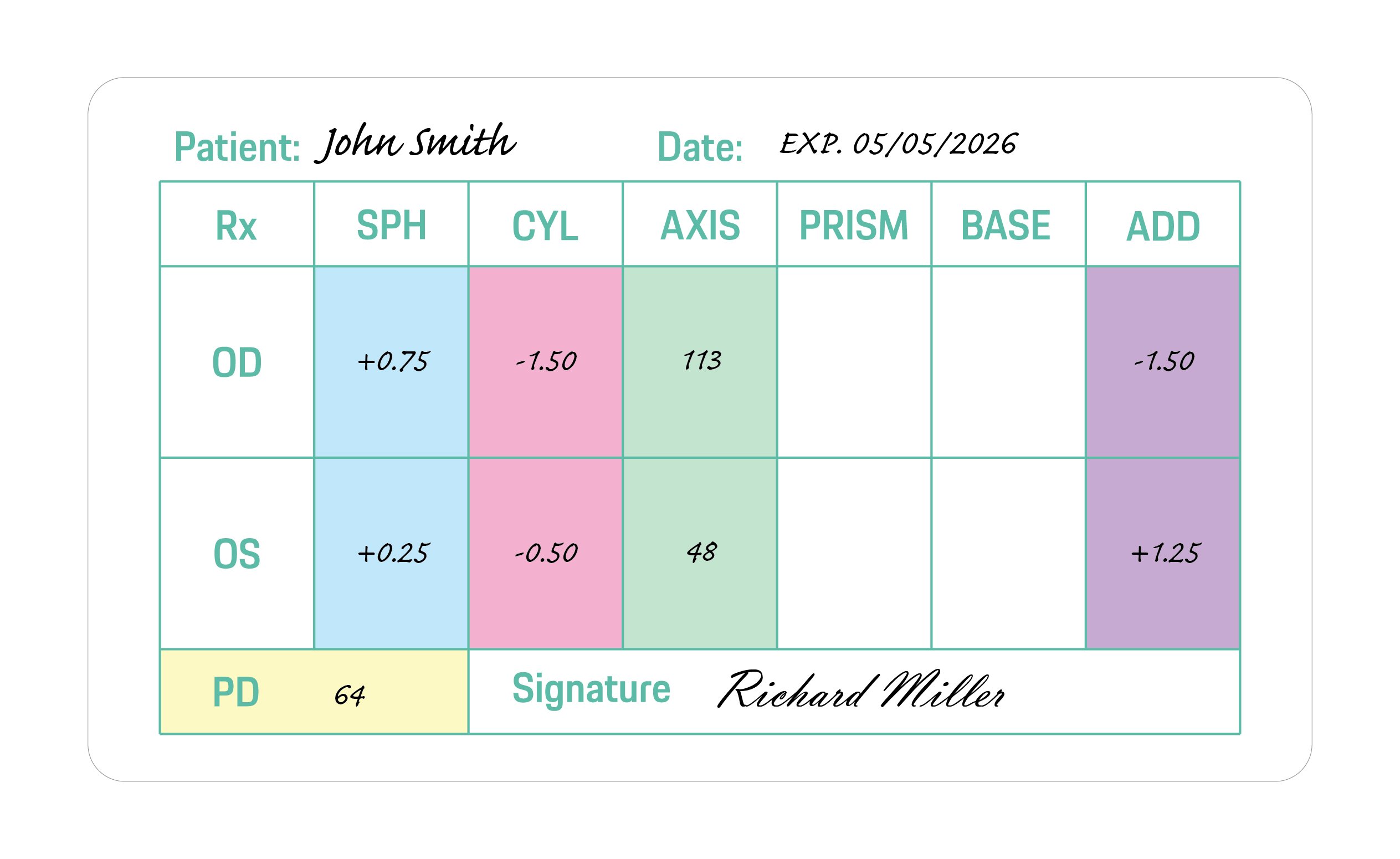
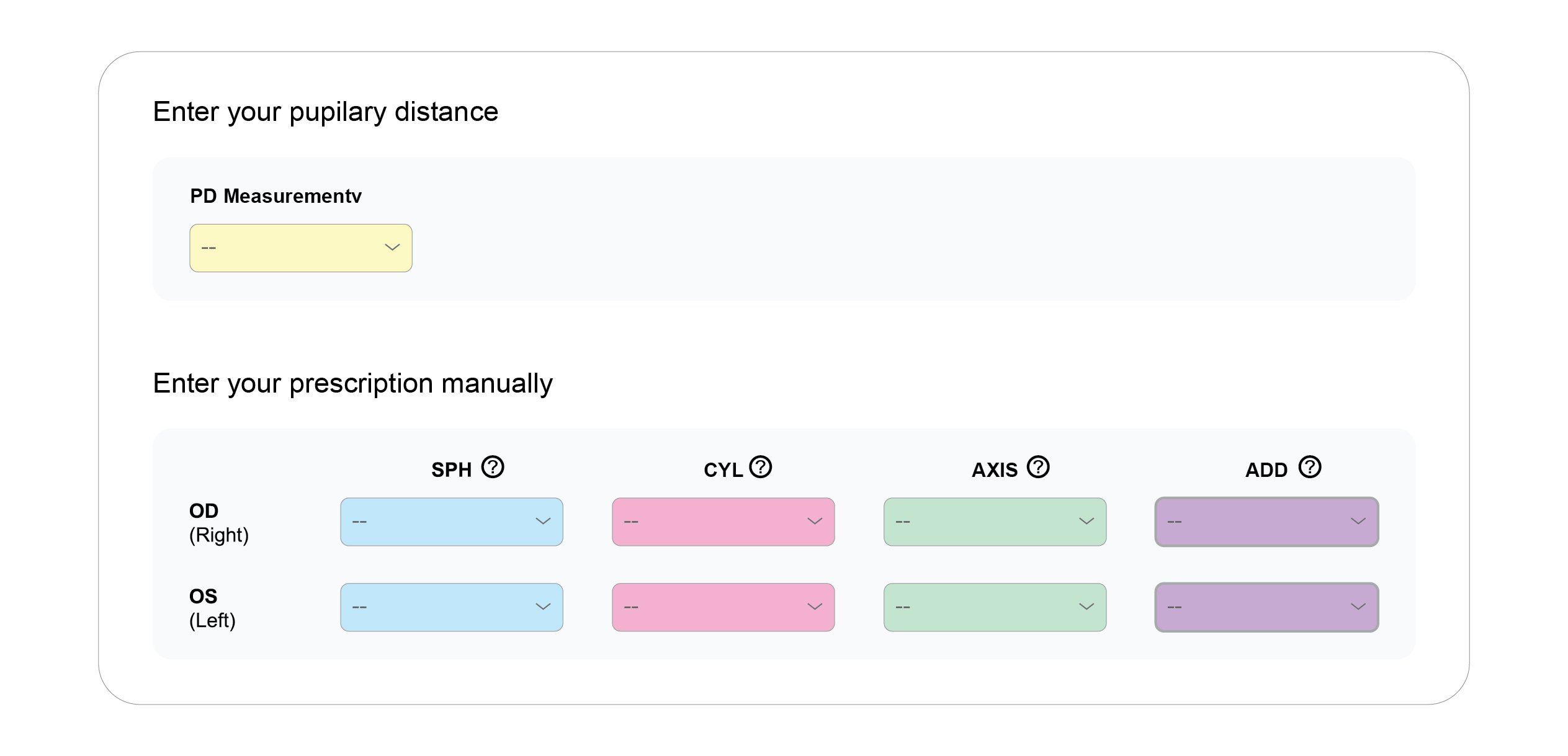
OD is an abbreviation for the Latin term oculus dexter which means right eye. Notice that the right eye information is asked for first even though we typically read from left to right.
OS is an abbreviation of the Latin oculus sinister which means left eye. That will be referenced on the far right column of the prescription.
SPH is short for sphere. The sphere of your prescription indicates the power on the lenses that is needed to see clearly. A plus (+) symbol indicates the eyeglass wearer is farsighted. A minus (-) symbol indicates that the eyeglass wearer is nearsighted.
CYL is short for cylinder. The cylinder indicates the lens power necessary to correct astigmatism. If the column has no value (is blank), it indicates that the eyeglass wearer does not have astigmatism. If this is the case on your prescription, you can leave it blank when entering it in.
AXIS is a prescription will include an axis value for those with astigmatism. This number represents the angle of the lens that shouldn't feature a cylinder power to help correct your astigmatism.
ADD is short for "additional correction." This is where details about bifocals, multifocal lenses or progressive lenses would appear.
To help you get the most out of your or project, please tell me:
oHTTP = CREATEOBJECT("MSXML2.ServerXMLHTTP.6.0") oHTTP.Open("GET", "https://example.com", .F.) oHTTP.Send() lcResponse = oHTTP.ResponseText Use code with caution. 7. Essential Tips for Beginners
To keep queries fast, VFP9 uses Compound Index files ( .cdx ). These files automatically maintain indexes for your tables, ensuring your search operations remain instantaneous. The Database Container (.DBC)
Understanding the project manager, form designer, class designer, and database container (DBC) is the first step. A good guide shows you how to organize files efficiently. 2. Data Handling (DBFs and DBCs) visual foxpro 9 made simple pdf
As applications grow, you will need to look beyond simple local tables and prepare your app for client-server architectures. Local Views
Thus, treat these simplified guides as a VFP systems, not as a path to new greenfield development.
Visual FoxPro 9: Made Simple: Taxali, Ravi Kant - Amazon.com To help you get the most out of
Creating interactive forms, using form controls, and building visual classes.
Creating forms and reports, validation rules, triggers, referential integrity, and data buffering/transactions Connectivity:
The VFP9 Report Writer is incredibly robust, featuring a bands-based designer (Title, Page Header, Detail, Page Footer, Summary). Common Reporting Workflow Collect and filter data into a temporary cursor using SQL. Select the cursor. Run the report layout against that data. These files automatically maintain indexes for your tables,
Once your code, forms, and reports are ready, you must bundle them for distribution. The Compilation Process Open your . Click the Build button. Select Win32 Executable / COM Server (.EXE) .
VFP9 introduced significant enhancements that kept the platform relevant long after its initial release. One of its most powerful features is the Report Writer. In VFP9, the reporting engine was completely overhauled to be data-driven and extensible. Developers could finally create complex, multi-banded reports with ease, or even hook into the rendering process to output files directly to PDF, XML, or HTML. Additionally, VFP9 significantly improved its interoperability with the outside world. It offers deep support for XML Web Services and provides a "CursorAdapter" class, which allows developers to treat remote data (from SQL Server or Oracle) exactly like local FoxPro tables. This makes it an ideal tool for modernizing "legacy" data or acting as a powerful middleware.
When searching for a "Made Simple" style PDF for VFP 9, you are looking for a resource that avoids dense Microsoft MSDN documentation. Instead, a high-quality PDF guide should cover four core pillars:
Client-server applications, SQL-SELECT, and accessing remote data Access and Availability
*Discount applied on the current website price at the time of order. Offer only valid for new customer first contacts order over $10. Maximum discount of $100. Cannot be combined with any other offers. Promotions are subject to change without notice. We reserve the right to cancel orders that are in breach of the terms and conditions of this offer.



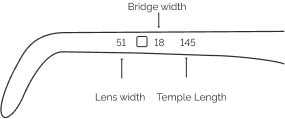
| Lens Width | Bridge Width | Temple Length | |
|---|---|---|---|
| XS | < 42 mm | < 16 mm | <=128 mm |
| S | 42 mm - 48 mm | 16 mm - 17 mm | 128 mm - 134 mm |
| M | 49 mm - 52 mm | 18 mm - 19 mm | 135 mm - 141 mm |
| L | >52 mm | >19 mm | >= 141 mm |
Buying eyewear should leave you happy and good-looking. Use our sizing tool to find frames that best fit your unique facial measurements.
Grab a regular card with a magnetic stripe on the back. Student IDs, credit cards and gift cards work well to start our online PD tool.
You may have received our paper PD measurement tool in your recent online order. In order to use this tool, place the ruler on your eyes so that the "0" lines up at the centre in between your eyes. Add up the two numbers, to get your PD. See example below:
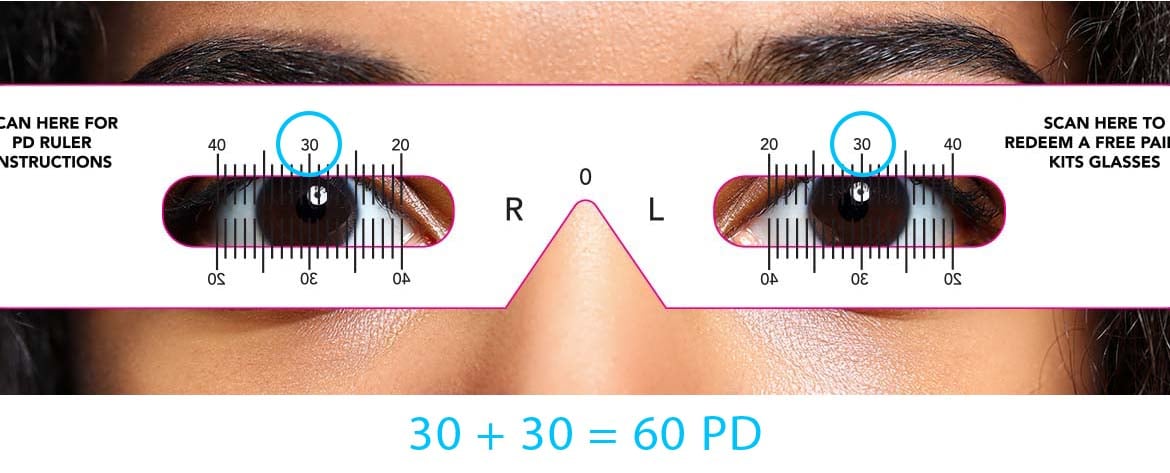
Click on this link to download and print your own PD measurement tool.
DOWNLOAD



 Check order status
 Place reorder
 Chat with us





 Use your insurance
 Help
Help