
Keyturion monitoring software

Delilah Facialabuse [repack] File

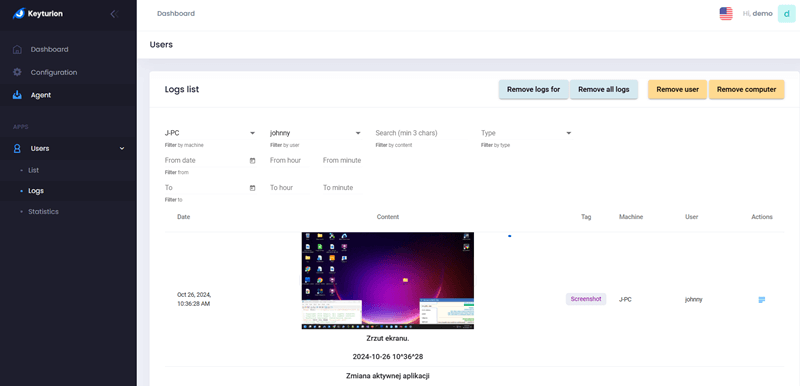
Keyturion monitoring software for Windows helps you track activities performed on a computer – even remotely. The software records all actions, including keystrokes, screenshots, printing, internet activity, and more. With numerous configuration options, it’s an ideal solution for both home computers and business devices used by employees.

Description      TEST FOR FREE

Features and use cases:

See products

Why choose Keyturion?

KeyTurion
en_US

Delilah Facialabuse [repack] File

In the world of entertainment, the name "Delilah" often evokes a sense of drama, beauty, and occasionally, controversy. Whether it’s a classic song being re-examined through a modern lens or a Hollywood scion sharing her "lifestyle" struggles on social media, the themes of abuse and recovery are surprisingly intertwined with this name.

This drama series follows Delilah Connolly, a civil rights attorney in Charlotte, NC. Reviews from sites like Common Sense Media and IMDb highlight:

While her platform offers immense comfort, it highlights a stark reality within lifestyle entertainment: a three-minute radio call cannot replace professional intervention. Delilah herself often acknowledges this limitation, pointing listeners toward support networks like Al-Anon or Nar-Anon when broader themes of substance abuse and destructive behavior hijack a household. 2. Pop Culture and the Normalization of Violence delilah facialabuse

Modern television series and films are moving away from two-dimensional archetypes. Audiences are now presented with stories that explore why individuals enter these cycles and how systemic factors perpetuate harm. Characters who might have once been dismissed as manipulative gold-diggers or toxic instigators are given complex backstories that highlight survival mechanisms, breaking down the simplistic "Delilah" label. True Crime and the Deconstruction of Luxury

From celebrity relationships scrutinized by the media to fictional narratives in prestige television, exploring the "Delilah lifestyle" reveals how entertainment both reflects and shapes our understanding of interpersonal trauma and survival. The Anatomy of the "Delilah" Archetype In the world of entertainment, the name "Delilah"

The explosion of true crime documentaries and investigative podcasts within the entertainment sector has further illuminated how abuse thrives in affluent lifestyles. These pieces of media frequently expose how wealth and status can be used to hide coercive control, silence victims, and manipulate legal systems, proving that a glamorous lifestyle can be the ultimate facade for severe domestic trauma. Navigating Awareness in Modern Entertainment

The darkest aspect of the "Delilah" review—and likely the source of the word "abuse" in the prompt—is the disturbing undercurrent of predation that often fuels young female stardom. Reviews from sites like Common Sense Media and

Delilah has often explained that her, faith is the anchor that allows her to offer hope to others, even when her own life feels challenging.

In the world of lifestyle and radio, the name Delilah is synonymous with , the "Mother of Talk Radio," whose brand is built on empathy and hope. Her personal history, however, is deeply marked by her own experiences with domestic challenges and abuse:

The entertainment industry, which includes music, film, television, and more, often highlights issues of abuse. This can range from on-set mistreatment to the portrayal of abuse in media.

In the modern lifestyle space, social media influencers often curate a perfect aesthetic that masks deeply abusive dynamics. The pressure to maintain a highly profitable, romanticized digital presence can trap individuals in harmful cycles. A partner might utilize emotional abuse behind closed doors while demanding a smiling presentation for a sponsored couples' vlog. This juxtaposition creates a unique psychological trap, as the victim's reality is constantly invalidated by thousands of comments praising their "perfect lifestyle." Media Representation: Rewriting the Narrative