We use cookies to ensure you get the best user experience on our website.Find Out More
Mobile apps, web apps, any platform. One shake, click, or tap gets you video reproductions, network logs, and everything developers need to fix issues fast.
Installation
Bugs
Crashes
Sessions


We are proud to be accepted into NVIDIA Inception, a program designed to support innovative startups building the next generation of AI-powered products. This strengthens our path as we continue expanding Crash AI, analytics intelligence, and smarter debugging workflows for engineering teams.


































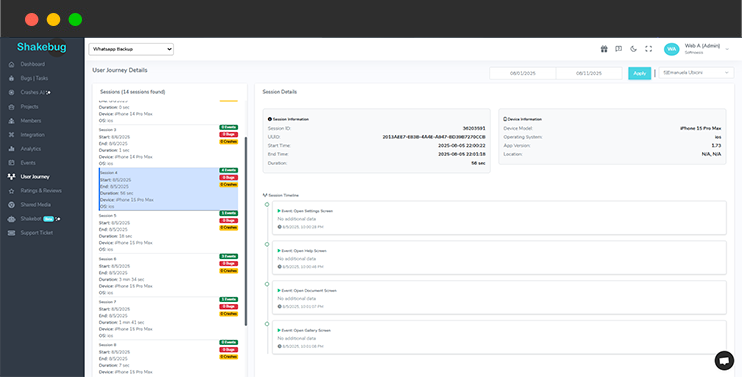
With Shakebug, you see bugs and the complete narrative. Get a clear timeline with our user journey, connecting sessions, events, bug reports, and crash data. See navigation, actions, and exact issue points. Fix issues faster and prioritize work with accurate, actionable insights in the same reporting and monitoring tool.
Wave goodbye to the hassle of sorting through countless identical crash reports. With Crash AI, our platform smartly organizes recurring crashes, presenting just one entry that includes all the essential details like the first occurrence, affected devices, OS versions, and much more.

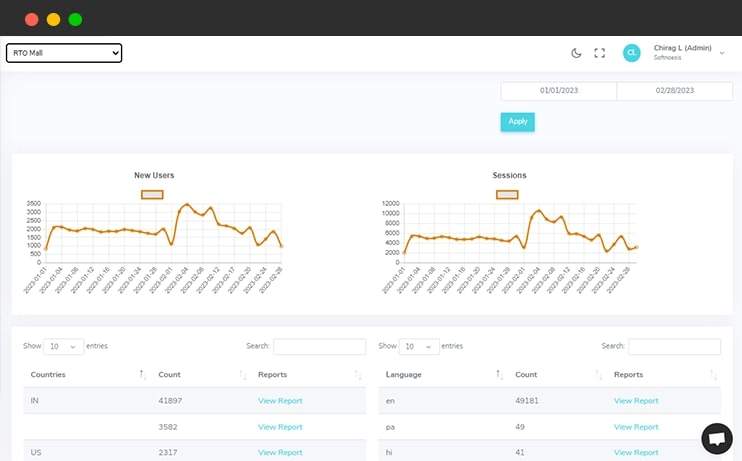
Along with bugs and crash reporting, Shakebug analyzes the application usage in different ways like session, language, countries etc. It also allows users to check analytics in the form of graphical representation over the selection period of time.
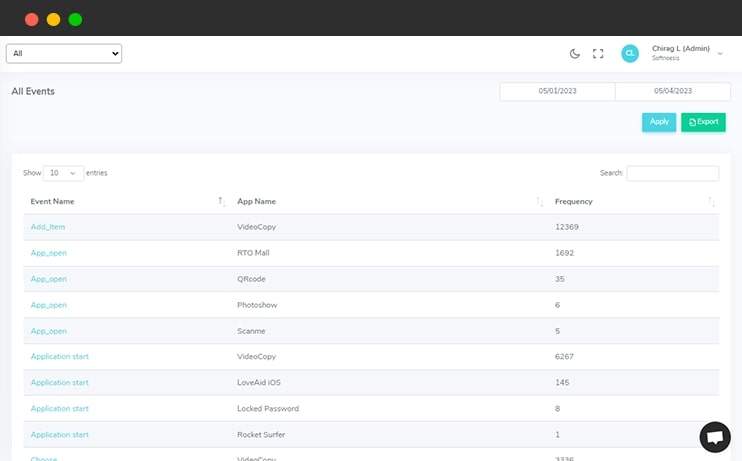
Developers/Users can add custom events and values for each action of the application easily where they want. In addition to this, users can also check the session of each event and value in graphical form as well.
Over 0 events tracked in action.
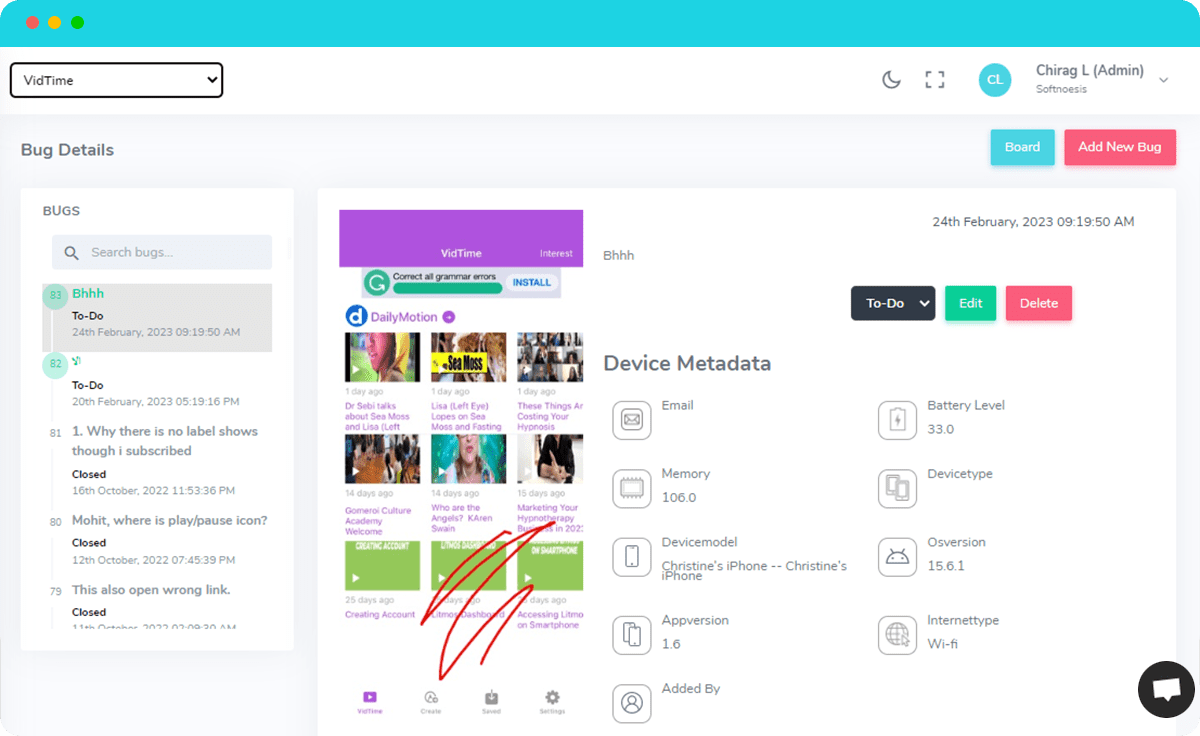
Shakebug helps users to highlight bugs by capturing the screenshot of the screen within a few clicks. This tool minimizes the bug reporting time for your tester and clients.
Shakebug will automatically report the crashes of applications whenever it occurs. Here users don't need to spend time for crash reporting.
: The Animal Welfare Act (AWA) ensures humane treatment, requiring lab technicians to adhere to strict SOPs to minimize variables that could compromise both animal health and research data.
In a clinical setting, veterinary professionals use behavioral science to provide more humane care.
The convergence of animal behavior and veterinary science is revolutionizing how we diagnose, treat, and prevent disease. This multidisciplinary approach—often called "behavioral veterinary medicine"—is no longer a niche specialty; it is the gold standard for modern animal welfare.
The integration of animal behavior and veterinary science has fundamentally changed how we care for domestic animals. By viewing medicine through the lens of behavior, veterinary professionals ensure that our animals live lives that are both physically healthy and emotionally fulfilled. : The Animal Welfare Act (AWA) ensures humane
. This paper argues that behavioral knowledge is not just a specialty but a core clinical tool for diagnosis, safe handling, and improving animal welfare. ResearchGate Key Concepts & "Useful" Papers
The next step in this evolution is the use of . New research is using deep learning models to assess pain in livestock, such as cattle, by analyzing facial expressions and movements more precisely than the human eye. This technology allows for sustainable animal care by identifying health issues before they require heavy drug use. If you're interested in learning more, I can:
In modern veterinary medicine, behavior is often the first "diagnostic test" a doctor performs. Sudden aggression, for instance, isn't always a "training" issue; it can be a symptom of , joint pain , or neurological disorders like epilepsy. animals can develop repetitive
Research in this field bridges the gap between biological mechanisms and observable actions.
If you need ongoing research, these journals are the gold standard for the intersection of behavior and veterinary science: The Science of Animal Behavior and Welfare - Frontiers
One of the most useful foundational papers connecting these two fields is Why Veterinarians Should Understand Animal Behavior purposeless behaviors. Examples include tail-chasing
High stress levels trigger the release of cortisol, which suppresses the immune system and delays wound healing. Minimizing fear during veterinary visits directly improves clinical outcomes.
Just as Fitbits track human sleep and heart rate, veterinary wearables (like PetPace, Invoxia) track activity, respiratory rate, and restlessness. Algorithms are being trained to detect subtle behavioral changes that precede illness. For example, a dog that suddenly starts pacing at 3 AM (a change in circadian rhythm) might be developing Cushing's disease or cognitive dysfunction.
Similar to human OCD, animals can develop repetitive, purposeless behaviors. Examples include tail-chasing, flank-sucking in Dobermans, or psychogenic alopecia (over-grooming to the point of hair loss) in cats. These behaviors often trigger the release of endorphins, helping the animal cope with a stressful environment. The Role of Behavior in Livestock and Welfare
The behavioral science behind this is clear:

Open your application on your mobile phone and shake it. After that screen will appear where you can highlight the area of the bug.

After highlighting the area, a screen will appear where the user can write a bug description which explains the details about bugs or issues.
Once you report the bug, you will get the following screen with bug’s details along with device and OS information to your assigned developers. They can update its status when it is resolved.