
Get to the root of your digestive issues with gut-brain therapy techniques that help you self-manage your gut symptoms in just 6-weeks.

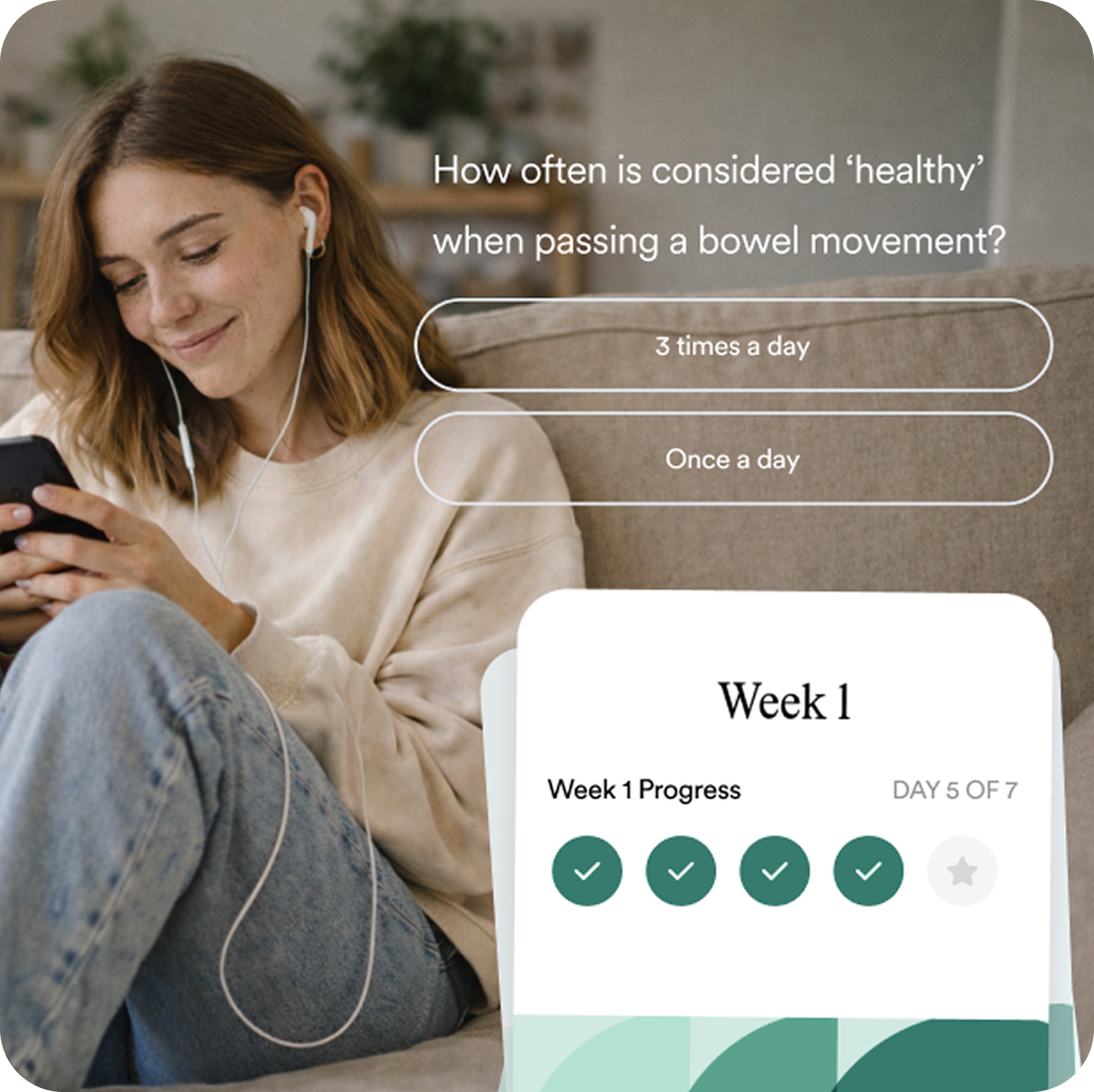


IBS, functional dyspepsia, functional constipation, and functional heartburn are now classified as gut-brain disorders - conditions driven by miscommunication between the gut and brain. The same gut-brain dysfunction also explains why many people with IBD continue to experience pain, constipation, or diarrhea even when their disease is in remission.
When the gut and brain fail to communicate properly, the body can misinterpret normal digestive processes as pain or discomfort. This heightened sensitivity, known as visceral hypersensitivity, can make the gut more reactive and contribute to gastrointestinal symptoms.


Nerva combines evidence-based gut-brain therapy techniques with real human support to help you self-manage symptoms, rebuild confidence, and get back to living fully.

The Nerva program was co-founded by Dr. Simone Peters, who ran a clinical trial with Monash University that found gut-brain therapy therapy worked just as well as the Low FODMAP diet in helping you participants well with and self-manage IBS.


Gut-brain therapy techniques targets the source of the problem: oversensitive nerves in the gut.

Gut-brain therapy techniques teaches you how to address this miscommunication between the gut and brain.

Gut-brain therapy techniques has been shown to help with constipation, diarrhea and mixed IBS.

Studies have shown gut-brain therapy techniques can help you achieve long-lasting IBS management.



Answer questions about you and your gut history to see if Nerva can work for you.

Daily gut-brain sessions, educational content, and goal oriented progress, tailored to your preferences.

Learn skills that can help you teach your brain to ignore false alarms from the gut triggered by food and stress.

Live the life you want, free from the control of digestive diseases.
.png)

Backed by 5+ studies including a randomized controlled trial.

9/10 members see meaningful progress in 4-6 weeks.

Learn skills focused on retraining the gut-brain axis.

Short daily sessions from the comfort of your home.

: Toss in boiled penne or macaroni, a splash of heavy cream for a "restaurant-style" finish, and top with fresh coriander. Homemade "Master" Garam Masala Blend
Organizations specializing in digital rights offer legal guidance, psychological support, and technical assistance to clean up unauthorized digital footprints. Share public link
Crisp white with golden borders, reflecting the minimalist aesthetic of the coastal south. masaladesi mms
Section 66E explicitly criminalizes violations of bodily privacy, while Section 67A prohibits the publishing or transmitting of sexually explicit material electronically.
From the rich, creamy curries and tandoori dishes of the North to the coconut-infused, rice-based delicacies of the South, each region has its own culinary identity. : Toss in boiled penne or macaroni, a
┌──────────────────────┐ │ THE MODERN INDIAN │ └──────────┬───────────┘ │ ┌────────────────┴────────────────┐ ▼ ▼ ┌──────────────────────┐ ┌──────────────────────┐ │ DIGITAL REVOLUTION │ │ CULTURAL ROOTS │ │ • UPI Cashless Trade │ │ • Handloom Sarees │ │ • Global Tech Hubs │ │ • Yoga & Ayurveda │ │ • High-Speed OTT │ │ • Ancestral Customs │ └──────────────────────┘ └──────────────────────┘ The Digital Village
Masala Desi, which translates to "spicy local" or "spicy desi (country) food," is more than just a snack; it's a culinary experience that embodies the rich and diverse flavors of India. The term "Desi" refers to something that is local or native, often used to denote a connection to one's homeland or traditional roots. Masala Desi snacks, including MMS, are a reflection of India's culinary diversity, with a blend of spices, herbs, and ingredients that vary from region to region. The term "Desi" refers to something that is
To help tailor future cultural content, could you tell me more about your specific goal? If you'd like, let me know:
But the real story lies in the inclusivity of these celebrations. It’s the story of a Hindu neighbor sending sweets to a Muslim friend, or an entire office floor—regardless of faith—dressing up in ethnic silk for a Diwali party. These festivals are the heartbeat of the country, acting as a periodic reminder that despite the chaos of daily life, there is always a reason to celebrate. 5. The Concept of 'Jugaad'
The Sanskrit verse Atithi Devo Bhava translates to "The guest is God," turning hospitality into a spiritual duty. 2. A Culinary Journey Through Regional Kitchens

"Hi, it's Alex, one of the founders of Nerva alongside Chris and Dr. Simone Peters.
We designed Nerva to help people with gut-brain disorders get back to a happy, normal life, free of flare-up worries. We're so proud of the fact that we've already helped over 300,000 people live better. Yet, we understand Nerva may not work for some people which is why we have a 100% money back guarantee.
If you finish your 6-week program and think Nerva hasn't helped you manage your symptoms, simply email support for a full refund of the Nerva program."
- Alex Naoumidis, Co-Founder and Co-CEO, Mindset Health


Based on studies that helped 3 in 4 people manage their gut symptoms.

15 minutes a day for 6 weeks. Short and relaxing sessions that fit with your schedule.

Discover helpful and calming flare-up exercises, like our deep breathing techniques.

Listen anytime and anywhere (home, office, couch, you name it).

Learn about gut-brain disorders with a range of easy to understand in-app articles.

Say bye to bots. We have real Nerva team members ready to help!
.svg)
.svg)


1) Anderson, Ellen J. BNutSci, MDiet1,2; Peters, Simone L. BSc (Psychophysiology) (Hons), PhD1; Gibson, Peter R. MBBS(Hons), MD1,2; Halmos, Emma P. BNutDiet, PGradDipBSc, PhD1,2. Comparison of Digitally Delivered Gut-Directed Hypnotherapy Program With an Active Control for Irritable Bowel Syndrome. The American Journal of Gastroenterology 120(2):p 440-448, February 2025. | DOI: 10.14309/ajg.0000000000002921 2) Peters, S. L., Yao, C. K., Philpott, H., Yelland, G. W., Muir, J. G., & Gibson, P. R. (2016). Randomised clinical trial: the efficacy of gut-directed hypnotherapy is similar to that of the low FODMAP diet for the treatment of irritable bowel syndrome. Alimentary pharmacology & therapeutics, 44(5), 447–459. https://doi.org/10.1111/apt.13706


